London rough sleeping falls 10% as youth cases drop by 45%
City Hall data shows 202 young adults slept rough in April-June 2026, down from 366 a year earlier
Trust 42Craft 55Hype 35How this was reported ▾
Only one named source (Centre Point) and figures cited without direct document access.
How well corroborated and evidenced the reporting is. Higher is better.
Quotes provided but no affected individuals or local voices quoted.
Context, balance and separation of fact from comment. Higher is better.
Headline overstates impact with 'falls by 45%' without caveats.
How far presentation runs ahead of substance. Lower is better.
1 source assessed · methodology
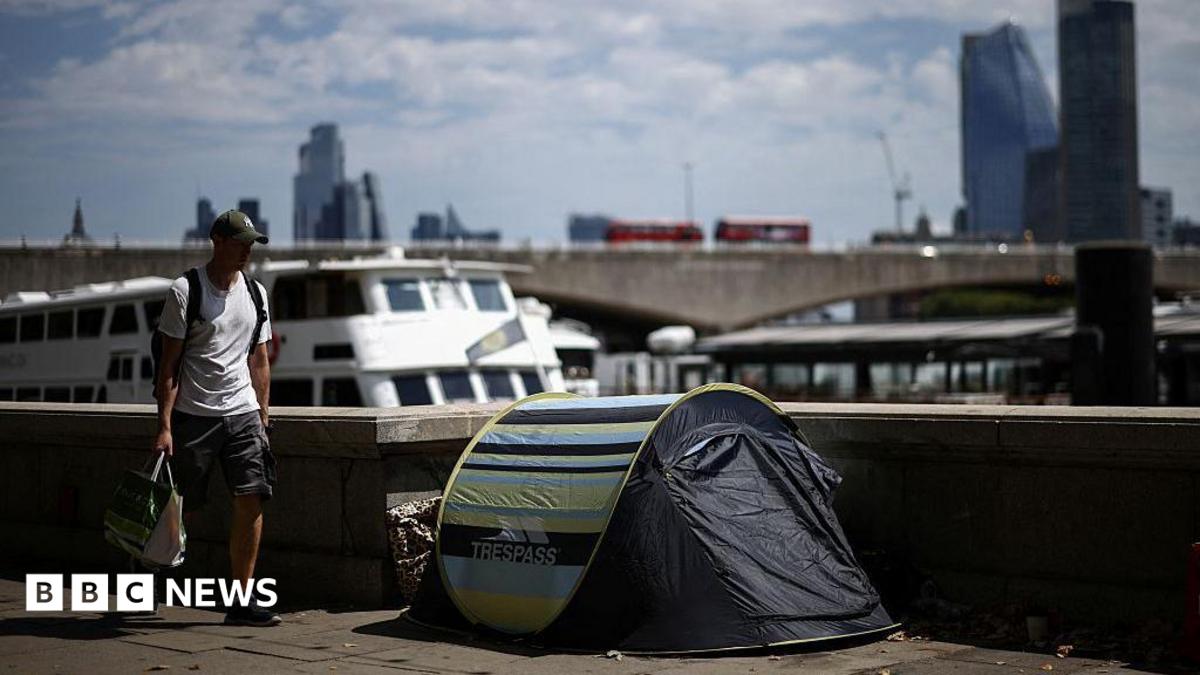
The number of young adults sleeping rough in London has fallen by 45% in the past year, according to official data released by City Hall. Between April and June 2026, outreach teams recorded 202 people aged 18 to 25 sleeping on the streets, down from 366 in the same period of 2025. The figures represent 5.1% of all rough sleeping cases in the capital during the quarter.
Overall rough sleeping in London decreased by 10% annually, with 3,959 individuals recorded in the three-month period. City Hall attributed the reduction to the mayor’s Rough Sleeping Plan of Action, launched in 2025. A spokesperson for Mayor Sadiq Khan said the data showed the plan was "having an impact" but acknowledged "more work to do" to meet the 2030 target of ending rough sleeping.
Mayors to gain powers over water companies in new plan
Government considers nine new regional bodies to oversee water firms following record complaints.
No Second Night Out success
The Combined Homelessness and Information Network (Chain) report highlighted the effectiveness of the No Second Night Out initiative. Of the 1,685 individuals seen rough sleeping for the first time in Q2 2026, 77% were prevented from spending a second night on the streets. This equates to 1,300 people diverted from long-term homelessness.
Despite this progress, the number of long-term rough sleepers rose by 6% compared to the previous quarter, reaching 680 individuals. However, this figure remains 14% lower than in April-June 2025. New rough sleepers accounted for 43% of the total recorded population, while intermittent cases made up 42%.

Heathrow third runway opposed by Sadiq Khan over £9bn transport gap
Mayor says expansion risks climate targets and would add 22 million annual car trips to M4 and M25
Nationality and gender trends
UK nationals made up 54% of rough sleepers in London during Q2 2026, an increase from 50% in the previous quarter. European Union nationals accounted for 19%, while those from Africa and Asia represented 12% and 10% respectively. The proportion of UK nationals has risen steadily from 48% in October-December 2025.
Female rough sleeping fell by nearly 7% to 704 individuals, maintaining an 18% share of the total recorded cases. Outreach workers’ assessments identified severe vulnerabilities among rough sleepers, including addiction, mental health issues and prior experience in care.
London is providing the blueprint for what can be achieved when political leaders have the vision and intent to end street homelessness. These figures are a real cause for celebration, but the job is not done.
Lisa Doyle, head of policy and public affairs at Centre Point
What happens next
Mayor Sadiq Khan has committed £8 million in City Hall’s budget to tackle rough sleeping, aiming to meet his 2030 target of ending it entirely. Prime Minister Andy Burnham made a similar pledge nationally upon taking office but has not set a timeline. Centre Point has urged both leaders to sustain efforts until rough sleeping is "reduced to as close to zero as possible".
Questions this report answers
+How many young adults slept rough in London in April-June 2026?
Outreach teams recorded 202 people aged 18 to 25 sleeping rough in London between April and June 2026. This marks a 45% decrease from the 366 young adults recorded in the same period of 2025, according to City Hall data.
+What is the No Second Night Out initiative?
No Second Night Out is a scheme that prevented 77% of new rough sleepers in London from spending a second night on the streets in Q2 2026. It aims to intervene early to stop short-term homelessness from becoming long-term.
+How much has overall rough sleeping in London fallen?
Overall rough sleeping in London fell by 10% annually, with 3,959 individuals recorded in April-June 2026. City Hall attributed the reduction to the mayor’s Rough Sleeping Plan of Action, launched in 2025.
+What is the mayor’s target for ending rough sleeping?
Mayor Sadiq Khan has pledged to end rough sleeping in London by 2030. He has allocated £8 million in City Hall’s budget for 2026-27 to support this goal, though long-term cases rose by 6% in the latest quarter.
WE FILE
No invented reporter. No hidden source trail.
The HNL Local Desk assembled this report from the outlets listed below. Language-model drafting is reviewed under human editorial supervision, with scoring notes and corrections kept visible.
Harrow AM
The compact morning rundown, with scores and source links.
More Coverage in World
Mayors to gain powers over water companies in new plan
Heathrow third runway opposed by Sadiq Khan over £9bn transport gap

Andy Burnham faces first PMQs six weeks into premiership
